

About
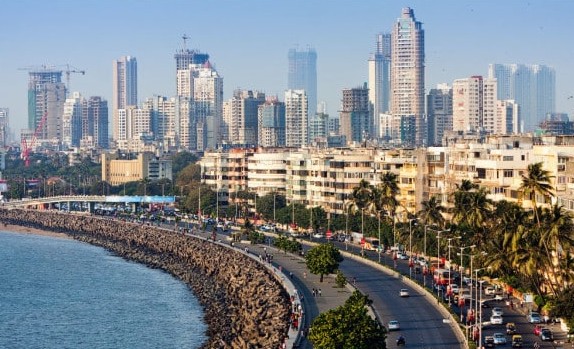
IDE Technologies has been awarded a landmark Engineering, Procurement and Construction (EPC) contract by the Brihanmumbai Municipal Corporation (BMC) to design, build, and operate a large-scale seawater reverse osmosis (SWRO) desalination plant at Manori, on Mumbai’s western coastline. Delivered in joint venture with Indian engineering and construction firm GVPR Engineers Limited, the plant will produce 200 million liters per day (MLD) of potable water in its first phase, helping bridge the gap between Mumbai’s existing 4,000 MLD water supply and its total demand of 4,600 MLD.
The project’s intake-outfall system, tunnels, pumping station, and product water storage are all being built to an ultimate capacity of 400 MLD, allowing Mumbai to double its desalinated water supply in the future with minimal additional construction. IDE will operate and maintain the facility for 20 years after commissioning, giving India’s financial capital a drought-proof water source that is independent of monsoon variability for decades to come.
- Capacity: 200 MLD / 200,000 m³ per day (expandable to 400 MLD / 400,000 m³ per day)
- Technology: Seawater Reverse Osmosis (SWRO): UF and DAF pre-treatment, double-pass RO, remineralization
- Water Source: Seawater, Arabian Sea (offshore intake)
- Contract type: EPC plus 20-year Operation & Maintenance
- Location: Village Manori
- Customer: Brihanmumbai Municipal Corporation (BMC)
- Usage: Municipal drinking water
- Commissioning date: 2029 EXP.
Highlights
-
Built for tomorrow’s capacity, today.
Intake, outfall, tunnels, pumping station, and storage are all sized for a future 400 MLD, doubling supply later with minimal added construction.
-
India’s first tunnel intake and outfall system
2,600 mm conduits bored more than two kilometers offshore by TBM, a method proven in Australia and Israel, now used in India for the first time.
-
Engineered to protect marine life
Capped intake velocity, screened intake heads, and 15+ diffusers return brine to near-baseline salinity within 350 to 450 meters of the outfall.
-
Powered by 100% renewable energy
Runs entirely on green power, neutralizing desalination’s typical carbon footprint and setting a national sustainability benchmark.


Some of our notable thermal desalination projects