


Operating a modern water or desalination plant is demanding. Operators and maintenance teams must keep the plant producing the required amount of water, maintain equipment.
ZLD for Steel Plants in India: What Actually Works (and What Fails)
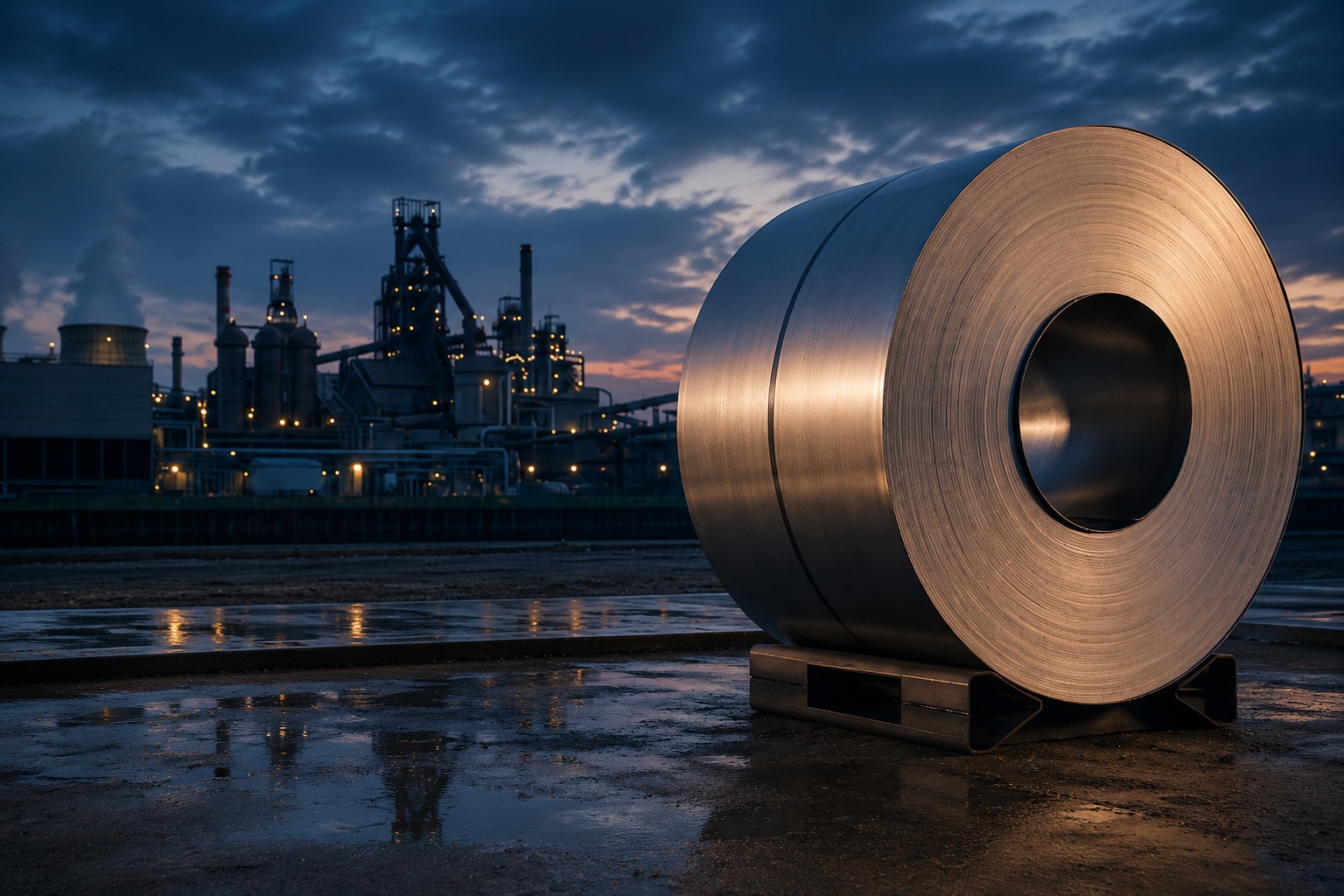
India is in the middle of one of the most ambitious infrastructure expansions in modern history. New airports, railway corridors, expressways, ports, and manufacturing facilities are reshaping the country’s economic geography and all of it runs on steel.
India is now the world’s second-largest steel producer, with crude steel capacity targeted to reach 300 million metric tonnes by 2030-31. The country’s steel consumption doubled over the past decade to 152 million tonnes, and output is projected to grow another 8% in FY2026-27 alone.
That scale of expansion brings an unavoidable problem: water. Integrated steel plants are among the most water-intensive industrial operations in existence. A single facility can require tens of millions of litres per day for cooling, quenching, boiler feed, scrubbing, and floor operations. And in a country where government-supplied freshwater is increasingly constrained and inland plants face strict prohibition on liquid discharge, steel producers are confronting a compliance and cost challenge they cannot defer.
Zero Liquid Discharge (ZLD) is the regulatory response. But understanding the ZLD mandate is only the beginning. The harder question is what actually works for steel, and what approaches look compelling on paper but fail in practice. The answer depends heavily on plant location, existing infrastructure, and production economics. This article maps the landscape.
A Sector Under Pressure to Expand and Conserve
The scale of India’s steel capacity expansion is striking. ArcelorMittal Nippon Steel India (AMNS India) is targeting 25-26 million metric tonnes per year by 2030, nearly tripling its current output, with expansion at its Hazira facility on the West Coast and a new greenfield plant in Andhra Pradesh. Tata Steel is aiming to double its domestic capacity to 40 million tonnes. JSW Steel has announced plans for 50 million tonnes by 2030. These are not incremental upgrades they are transformational investments.
Every tonne of additional steel capacity requires additional water. Integrated plants typically draw between 25-30 cubic metres of water per tonne of crude steel produced, with actual net consumption (after recirculation and return) in the range of 1.5 to 4 cubic metres per tonne. At the volumes India’s steel sector is targeting, even marginal improvements in water use efficiency translate into significant operating cost savings and, critically, determine whether a plant can obtain the environmental clearances it needs to expand.
Water use ratio (the cubic metres of freshwater consumed per tonne of steel) has become a boardroom metric, not just an environmental compliance figure. Indian steel producers that export are increasingly benchmarked against global peers and scrutinised under frameworks like the EU’s Carbon Border Adjustment Mechanism, where water efficiency feeds into broader carbon and sustainability scores. For companies competing in international markets, water management is a competitiveness issue.
The ZLD Mandate: Regulation That Leaves No Room to Negotiate
India’s regulatory environment for industrial wastewater has tightened steadily over the past decade. The Central Pollution Control Board (CPCB) and State Pollution Control Boards (SPCBs), backed by the National Green Tribunal, have moved from general discharge standards to sector-specific mandates and, in many cases, explicit ZLD requirements embedded in Environmental Clearance conditions.
For steel plants, the compliance picture is shaped largely by geography. Coastal facilities (those with access to India’s 7,500-kilometre coastline) can, in certain circumstances, discharge treated effluent to the sea through properly engineered marine outfalls, typically requiring pipelines extending two to three kilometres offshore with diffusers to ensure adequate dilution. This does not eliminate the treatment obligation, but it does provide an outlet for final brine or residual streams that would otherwise require ZLD.
Inland plants (those without coastal access) have no such option. For them, ZLD is not a target or an aspiration. It is the only permitted operating mode. Any liquid discharge, regardless of treatment quality, is non-compliant. Plants that fail to meet ZLD conditions face the prospect of closure orders from regulators. As these plants expand capacity, they cannot simply draw more freshwater from government sources. India is a water-stressed country, and allocation of surface and groundwater to industrial users is increasingly restricted. The only path to expansion is to close the loop on water internally.
What Fails: Why Desalination Is the Wrong Answer for Steel
When a steel plant with coastal access considers its water options, seawater desalination seems like an obvious candidate. Unlimited feedwater supply, no dependence on government allocation, and a proven technology base. Several major Indian steel producers have explored desalination projects in the 100-300 MLD range. In practice, nearly all of them have stepped back from the idea.
The reason is economics. Steel is a commodity. Unlike semiconductor fabrication or pharmaceutical manufacturing (where product margins can absorb premium input costs) steel producers compete on a global cost basis. Water tariffs from a desalination plant, once capital recovery, energy, and operating costs are factored in, produce a water price that is simply incompatible with steel’s per-tonne economics. A steel plant using desalinated water as its primary feedwater source would enter the market at a structural cost disadvantage.
Equally important: desalination does not solve the ZLD compliance problem. It addresses supply, not discharge. A coastal plant with a 100 MLD desalination unit still generates wastewater that needs to be treated before disposal. Desalination adds a cost layer without removing the compliance burden. For inland plants, desalination is irrelevant altogether. The two-year exploration, reassessment, and eventual abandonment of large desalination proposals by some of India’s major steel groups reflects a hard-learned lesson: solving the water problem for steel requires a fundamentally different approach.
What Actually Works: Matching the Solution to the Scenario
The right water management strategy for a steel plant is not universal. It depends on three variables: coastal or inland location, the quality and volume of available alternative water sources, and the existing treatment infrastructure on site. Getting this analysis right before committing to capital expenditure is critical. The wrong solution is not just expensive; it can leave a plant out of compliance or unable to expand.
For coastal plants, the most economically viable path is treated sewage reuse. Steel facilities located near urban centres have access to secondary-treated sewage from municipal sewage treatment plants (STPs). This water, once processed through an industrial-grade tertiary treatment train, can substitute for a significant portion of freshwater demand in cooling towers and non-contact process applications. The cost of treating STP effluent to an acceptable feedwater quality is a fraction of the cost of desalination, and it converts a waste stream into a productive resource. For plants that generate their own internal wastewater, a maximum recovery approach (pushing recirculation rates as high as technically feasible) further reduces freshwater intake and the volume requiring final treatment.
For inland plants, the challenge is more acute, and the technology selection more consequential. Cooling tower blowdown (the concentrated stream periodically discharged to prevent scale and corrosion in cooling circuits) is one of the largest and most treatable wastewater streams in a steel plant. Applying high-recovery membrane technologies to this stream can dramatically increase the volume of water returned to the cooling system, reducing both freshwater consumption and the load on the downstream ZLD train.
The most technically sophisticated approach combines Pulse Flow Reverse Osmosis (PFRO) with crystallisation. This pairing addresses the fundamental constraint of standard RO: the inability to handle very high salinity concentrate. By driving RO operation under pulse flow conditions and then processing the resulting high-TDS reject through a crystalliser, it becomes possible to recover water right up to the point of solid salt formation. The result is a dramatic reduction in the volume of waste requiring thermal treatment, lower energy consumption per cubic metre of recovered water, and in many cases, the ability to handle expansion volumes through an existing ZLD system without commissioning an additional thermal evaporation train.
IDE’s Position: Specialist Depth Where It Counts
What distinguishes effective water treatment design for steel from generic industrial water management is the understanding of saline, high-TDS streams (streams that standard RO systems struggle with and that conventional ZLD vendors often address with oversized thermal units). IDE’s core expertise is precisely this territory.
IDE’s background is in thermal desalination at scale: the engineering of systems that process highly saline feedwaters through evaporation, where understanding boiling point elevation, materials compatibility, and heat transfer at extreme concentrations is fundamental. This knowledge base transfers directly to the high-TDS concentrate streams that appear in steel plant ZLD systems. The same principles that govern the design of a large-scale multi-effect distillation unit apply when engineering a crystalliser for a steel mill’s blowdown reject.
On the membrane side, IDE brings a record of precision engineering in large-scale reverse osmosis (including advanced configurations such as internal staging within pressure vessels) and the deployment of PFRO as a practical tool for high-recovery applications. These are not experimental technologies. RO has been in industrial use for more than 40 years; crystalliser technology has been around for over 35. What IDE brings is the combination: pairing two proven technologies in a configuration that achieves results neither can deliver independently.
The competitive landscape in India’s industrial water treatment market is a mix of global generalists and capable local players. IDE’s value proposition is specialist depth at scale: the engineering rigour developed on large seawater desalination projects, applied to the ZLD challenges that define a steel plant’s compliance margin.
Conclusion: The Right Answer Depends on Asking the Right Questions
India’s steel sector is expanding fast, and the water and compliance challenges are expanding with it. ZLD is not going away. If anything, regulatory enforcement is intensifying as India’s freshwater stress deepens. The steel plants that manage this transition well will be those that resist the temptation of technically appealing but economically incompatible solutions, and instead build water strategies grounded in their specific location, infrastructure, and cost constraints.
For coastal plants, treated sewage reuse and maximum internal recirculation offer the best returns. For inland plants, high-recovery membrane systems combined with crystallisation can extend the life of existing ZLD infrastructure and absorb expansion volumes without the capital cost of additional thermal evaporation capacity. Neither approach is simple to engineer, but both are proven, and both are deliverable within the cost envelope that steel economics allow.
IDE brings 60 years of experience in mapping optimal water balance strategies, from initial feasibility assessment to full system design and delivery. If your plant is expanding, renegotiating its environmental clearance, or looking to reduce water costs without compromising compliance, we can help you find the approach that actually works for your specific situation.
Get in touch with IDE’s India team to start the conversation.

Nayan Shah is Director of Sales and Marketing at IDE Technologies India, bringing more than 25 years of experience in water treatment, specialty chemicals, sales and business development. Before joining IDE in 2019, he held leadership positions at SUEZ Water Technologies & Solutions and GE Water & Process Technologies. A chemical engineer with postgraduate qualifications in business management from NMIMS, Nayan focuses on advancing sustainable desalination, high-recovery water reuse and large-scale water infrastructure solutions across India. He also represents IDE at major industry forums and is closely involved in expanding the company’s partnerships and project portfolio in the region


Don’t Miss Out on IDE’s Latest stories
Related posts
-


Digital Twin Development for Advanced and Optimized Water Operation & Maintenance
Read more -


High‑Recovery RO for Semiconductor Wastewater: Why Conventional Systems Fall Short, and What Comes Next
The semiconductor industry is undergoing a profound transformation. The rapid rise of AI, high‑bandwidth memory (HBM), and advanced logic nodes is driving unprecedented.
Read more


