


Operating a modern water or desalination plant is demanding. Operators and maintenance teams must keep the plant producing the required amount of water, maintain equipment.
The Single Greatest Predictor of Water Project Success Isn’t Technology – It’s the Delivery Model
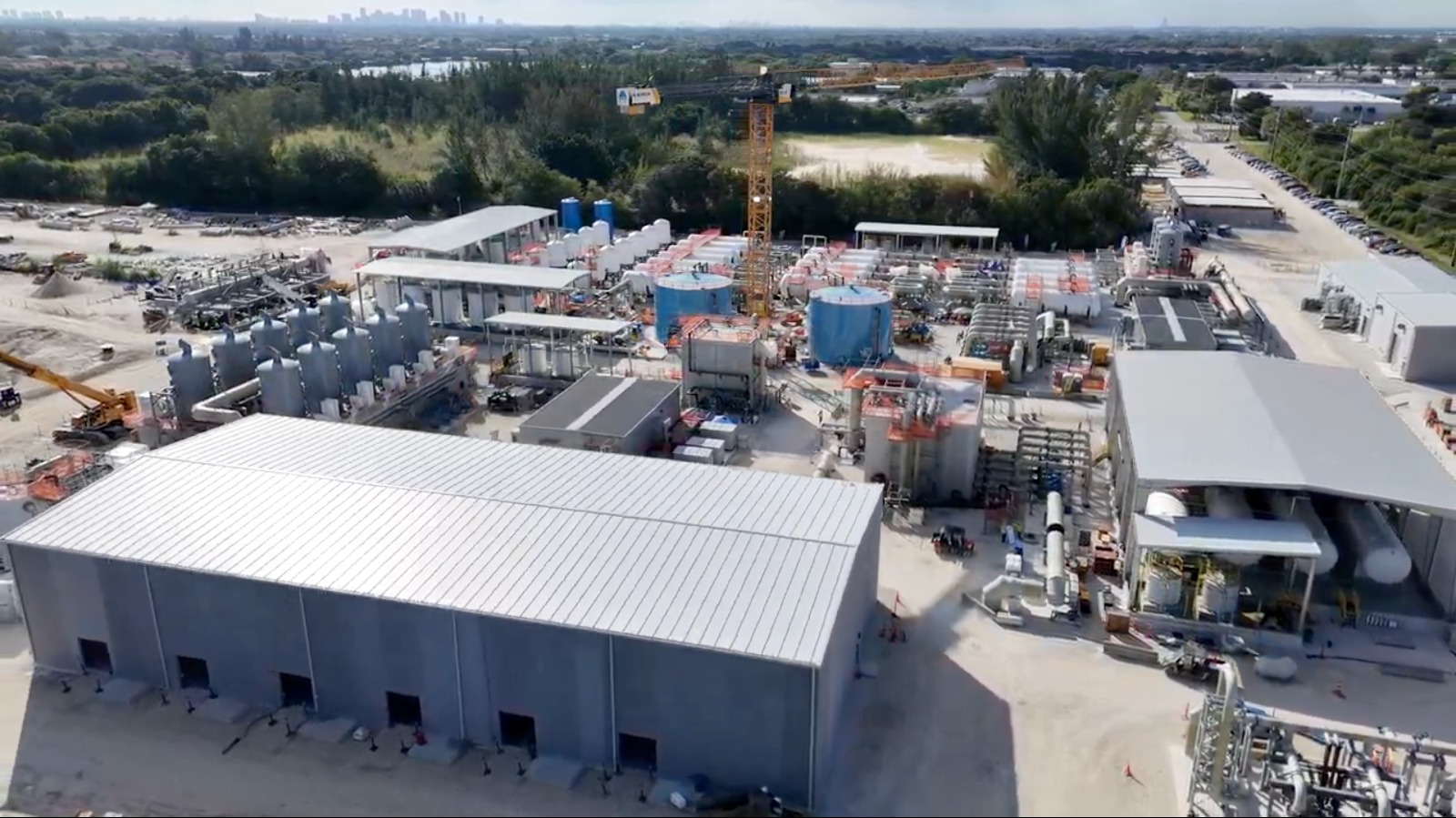
Why America’s $625 billion water infrastructure gap demands a new way of building, financing, and operating municipal water plants, and what Fort Lauderdale’s Prospect Lake project shows us about getting it right.
Half of the water treatment plants in the United States are operating beyond their original design life. Many were built during the Eisenhower era, engineered for a country with fewer people, simpler regulations, and no awareness of the contaminants now showing up in our taps. Those plants are now expected to deliver safe, reliable water to communities facing drought, climate volatility, PFAS contamination, and population growth, all at once.
The 2023 Drinking Water Infrastructure Needs Survey put the price tag for catching up at $625 billion over the next 20 years. Federal programs help with new builds, but most of the cost of replacing or upgrading aging plants falls back on local governments. Few municipalities have the capital, the in-house expertise, or the schedule headroom to deliver a modern treatment plant the way they did fifty years ago.
That’s why the most consequential decision a municipality makes on a major water project isn’t which technology to specify. It’s the delivery model. The single greatest predictor of whether a complex water project lands on budget, on schedule, and at the performance level it was sold on is the contractual structure that governs how it gets built and operated.
Traditional delivery models are buckling under the weight of modern water projects. Meanwhile, the collaborative Public-Private Partnership (P3) model is emerging as a serious alternative, as Fort Lauderdale’s Prospect Lake Clean Water Center now shows in practice.
A perfect storm of pressure on municipal water systems
The challenges facing American utilities aren’t new. What’s new is that they’re stacking on top of each other, all at the same time, in plants that were never designed to handle them.
Aging infrastructure drives a compounding cost curve: more frequent maintenance, higher energy use, growing vulnerability to extreme weather, and rising difficulty meeting modern treatment standards. PFAS, the so-called “forever chemicals” introduced in the 1940s, are now showing up in aquifers near airports, military bases, and industrial sites. The toxicity threshold is so low that the equivalent of one drop in five Olympic-sized swimming pools is considered harmful, and removing them requires advanced and costly treatment. Meanwhile, climate models project intensifying drought across many of the regions where demand is growing fastest.
A modern water treatment plant is no longer a single building with a few unit processes. It’s a multi-barrier treatment system with PFAS removal, advanced SCADA, cybersecurity requirements, energy recovery, and overlapping oversight from the EPA and state agencies, delivered under public scrutiny that includes public hearings, council politics, and social media. The job has changed. The way most communities procure it has not.
Why traditional delivery models are buckling
The default delivery model for U.S. public works, Design-Bid-Build, was built for a simpler world. It separates design from construction from operations, transfers risk in fragmented pieces, and rewards low bids over life-cycle performance. On a straightforward sidewalk or road project, that works fine. On a billion-gallon-a-day water plant with PFAS removal and a 30-year operating horizon, the seams start to show.
The data tells the story. On a representative $100 million project, Design-Bid-Build delivery has been associated with average cost overruns of $7.27 million and schedule slips of more than 11 months. Comparable P3 projects come in at roughly $2.12 million in overruns and under 6 months of delay. The difference isn’t talent or intent, it’s structure. P3 projects perform better because the model forces single-point accountability, real risk transfer, life-cycle thinking, and financial discipline from day one.
When you combine that performance gap with a $625 billion national funding shortfall, the math gets uncomfortable. Municipalities can’t afford to deliver every major plant the slow, expensive way.
What a collaborative P3 actually looks like
P3 is one of the most misunderstood acronyms in public infrastructure. In water especially, where service is essential, emotionally charged, and politically sensitive, the word “partnership” can be heard as “privatization.” It isn’t.
A collaborative P3 in water rests on four pillars:
Public ownership. The municipality owns the plant from day one. The arrangement is a service contract with performance obligations, not a sale and not privatization. The city sets water prices, and it can terminate the contract under clearly defined conditions.
Blended financing, skin in the game. Municipalities still use lower-cost municipal bonds for the bulk of the capital, often around 75 percent. The private partner contributes its own equity, often around 25 percent. That equity isn’t a financing trick. It’s the mechanism that aligns both parties around long-term performance, because if the plant underperforms, the private partner’s own money is on the line.
Budget certainty and efficiency. The contract locks in predictable water costs for decades, which dramatically simplifies municipal budgeting. It also flips the incentives on equipment selection: a partner operating a plant for 30 years has a strong reason to invest in the best technology available, because they’ll live with the consequences long after ribbon-cutting.
Faster delivery. Because the private partner can deploy capital immediately, projects don’t have to wait the 6 to 12 months it often takes a municipality to issue bonds. That alone can compress a delivery schedule by close to a year on a project where every month of delay carries cost.
The result isn’t a transfer of public assets to private hands. It’s a redistribution of risk and accountability so that both sides have something real to lose, and something real to gain, by getting the project right.
The “secret sauce”: interest alignment and risk transfer
What makes a collaborative P3 work isn’t any single clause in the contract. It’s the alignment of interests that the structure creates. Both parties succeed only if the plant performs over decades. Both pay if it doesn’t. That alignment changes how the project gets designed, how technology gets specified, and how operations get run.
It also clarifies when P3 is, and isn’t, the right model. P3 is not a silver bullet. For simple, predictable projects with stable operations and strong in-house expertise, sidewalks, playgrounds, routine pump replacements, traditional delivery is faster, simpler, and cheaper. P3 is built for projects where complexity is high, in-house experience is limited, technology is evolving, the risk of cost or performance surprises is real, and rapid delivery matters. Modern water treatment plants tick every box.
When a municipality does choose a P3 path, the partner selection becomes the most important decision on the project. A P3 is a 30-year marriage. References, financial strength, in-house engineering and operational depth, performance on prior contracts, site visits with operating staff, and values alignment all matter, and not in the abstract. Even the best-drafted contract cannot overcome the wrong partner.
Case study: Fort Lauderdale’s Prospect Lake Clean Water Center
Fort Lauderdale’s experience shows what this looks like in practice. The city’s Plant, built in 1954, had become a chronic problem, aging, increasingly unreliable, and producing yellowish, unappealing drinking water. Multiple traditional procurement attempts to replace it had stalled across political cycles, defeated by the project’s complexity and the limits of the standard delivery model.
IDE submitted an unsolicited proposal. Rather than awarding the contract directly, the city ran rigorous due diligence, issued a competitive RFP, and anonymously evaluated the responses to ensure a fair process. IDE was selected for a collaborative P3.
The structure followed the four pillars: full public ownership retained from day one; skin in the game; Full certainty of water price for 30 years; Accelerated delivery. The contract was signed in February 2023, and construction was nearing completion by late 2023, a pace effectively unheard of for a project of this scale and complexity under traditional delivery.
What this means for the next decade of water infrastructure
The U.S. water sector cannot rebuild itself plant-by-plant on the timeline current delivery models allow. The funding gap is too large, the technical demands too complex, and the operating environment, PFAS, drought, climate, regulation, too volatile to absorb routine cost overruns and multi-year delays.
The collaborative P3 model isn’t a replacement for public ownership, public accountability, or public-sector expertise. It’s a way of organizing capital, risk, and incentives around a challenge typical municipalities can’t solve alone. Where the project is complex, the technology is moving, and the timeline is unforgiving, the delivery model decision often determines every outcome that follows.
For municipal leaders looking at the plant they need to replace next, the most important question may not be what to build. It may be how to deliver it.
Matan Lev-Ari joined IDE in 2024 a Business Development Manager. Matan has gained over 15 years of experience in international development and economic strategy, and specializes in the development of long-term water assets in the Western Hemisphere, focusing on B.O.T. and Public-Private-Partnership (PPP) projects. Previously, he served as a Board Member at the Inter-American Development Bank in Washington D.C. and Chief of Staff to the Director General at the Ministry of Finance. Graduate of Georgetown University and Bar-Ilan University, Matan holds a Master's in Policy Management, an MBA, and a B.A. in Economics and Political Science


Don’t Miss Out on IDE’s Latest stories
Related posts
-


Digital Twin Development for Advanced and Optimized Water Operation & Maintenance
Read more -


High‑Recovery RO for Semiconductor Wastewater: Why Conventional Systems Fall Short, and What Comes Next
The semiconductor industry is undergoing a profound transformation. The rapid rise of AI, high‑bandwidth memory (HBM), and advanced logic nodes is driving unprecedented.
Read more


