


Groundwater depletion is no longer a distant environmental concern — it is a structural risk to water security, economic stability, and long-term resilience across.
The Crisis Beneath Our Feet: Adapting to Saltwater Intrusion
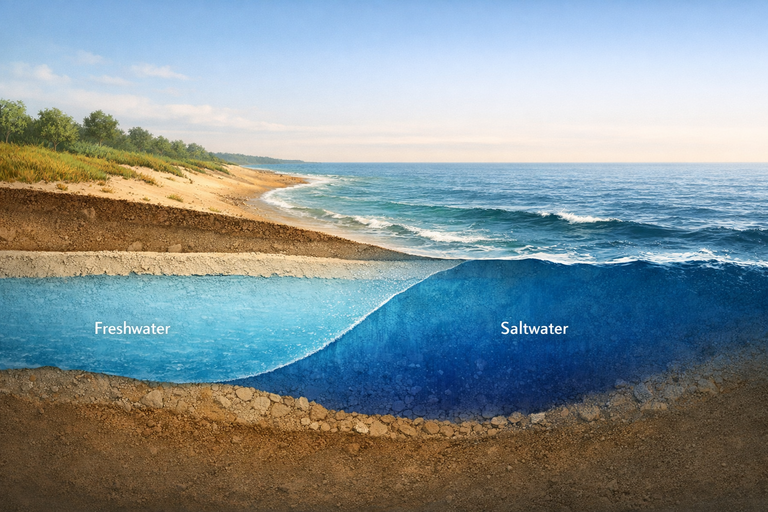
Water scarcity stands as one of the defining global challenges of the 21st century, yet a more pervasive threat is unfolding beneath the surface along America’s coastlines.
As freshwater aquifers are over-extracted to meet soaring demand, seawater migrates inland and can permanently corrupt traditional water supplies. For coastal states across the nation, this is not a distant projection but an active crisis requiring adaptation strategies.
The Permanence of Aquifer Contamination
The most alarming aspect of saltwater intrusion is its irreversibility. Once seawater infiltrates a freshwater aquifer, the damage is effectively permanent on human timescales. A 2020 article in Nature Communications by Jasechko et al. demonstrates that denser saltwater occupies underground pore spaces that can require decades or even centuries to flush out, rendering aquifer salinization by seawater almost irreversible.
This reality is already reshaping water supply systems across coastal America. In South Florida, for instance, the USGS has mapped the inland extent of saltwater in the Biscayne aquifer and found that by 2011 roughly 460 square miles (1,200 square kilometers) of the mainland aquifer were intruded by saltwater, with the saltwater front mapped farther inland in several areas compared to 1995. But Florida is far from alone in facing this operational challenge. Long Island, New York, faces severe saltwater intrusion threatening the sole-source aquifer serving three million residents. A 2024 USGS investigation documented that saltwater has caused the shutdown of public-supply wells in Kings, Queens, and Nassau Counties. In California’s coastal valleys, decades of over pumping have drawn seawater inland, contaminating aquifers in the Salinas Valley and other agricultural regions. Looking ahead, a joint NASA & Department of Defense study (2024) projected that saltwater intrusion will affect 77% of coastal watersheds globally by 2100, with the U.S. Eastern Seaboard, Gulf Coast, and low-lying Pacific Coast regions identified as particularly vulnerable.
Alternative Water Supply Technologies
Coastal states must diversify their water portfolios through Alternative Water Supply (AWS) technologies that match local realities. Desalination and advanced Water Reuse are no longer theoretical concepts, they represent operational necessities demonstrated across multiple jurisdictions.
Even in Florida, a state with an established strategy for AWS adoption, significant opportunity remains largely untapped. Brackish Water Reverse Osmosis currently accounts for roughly 7.0% of the state’s total water demand, primarily drawing from deeper brackish aquifers rather than the coastal aquifers under intrusion threat. This makes BWRO uniquely positioned as an immediate adaptation tool: expanding its capacity directly reduces withdrawals from the stressed freshwater aquifers where saltwater intrusion is advancing.
In parallel, treated wastewater can be purified through advanced reuse and incorporated into Aquifer Storage and Recovery (ASR) programs, reinforcing groundwater availability and helping maintain the hydraulic pressure needed to slow saltwater migration. As saltwater intrusion impacts accelerate, modern treatment technologies will inevitably play an increasingly central role in securing resilient supplies.
On a longer-term horizon, sea water desalination deserves a clearer role as an end-less source of water. Yet compared with other coastal states, Florida still deploys relatively little SWRO capacity, only 25-30 MGD representing 0.4% of the state’s supply. To put this development gap in perspective, California’s single Carlsbad Desalination Plant produces 50 MGD, double Florida’s entire statewide SWRO output.
This integrated approach is similar to strategies used in other sectors. For example, cities often tackle traffic congestion by improving public transportation and adding bus lanes at the same time that they plan and build light rail or metro systems. Similarly, government agencies must adopt an Integrated Circular Water Resilience Strategy that simultaneously mitigates immediate challenges while building long-term capacity. This dual approach ensures both near-term operational stability and the creation of an always-available water source, positioning SWRO as a vital piece of the long-term regional puzzle.
The recent completion of the Kermit H. Lewin Stock Island SWRO Facility in the Florida Keys, a $47 million plant producing 2 MGD engineered by the Florida Keys Aqueduct Authority, demonstrates forward-thinking decision-making and the viability of seawater desalination as a permanent freshwater source.
Despite notable investments in reuse and desalination, Florida still relies on aging and increasingly vulnerable infrastructure. Projects like Stock Island and the state’s expanding advanced reuse programs demonstrate what is possible when government agencies commit to adaptation. However, given the scale of saltwater intrusion and the vast infrastructure and technology still dependent on traditional groundwater sources, scaling up these proven solutions across the state remains an urgent imperative. While saltwater intrusion advances incrementally, the cumulative impact compounds over time, making proactive adaptation today essential to avoid cascading infrastructure failures tomorrow. Current efforts represent only a fraction of the transformation that will ultimately be required.
Public-Private Partnerships
At the national level, the scale of the crisis becomes staggering. A 2024 economic analysis by the American Society of Civil Engineers and the Value of Water Campaign estimates that the United States faces an annual water infrastructure investment gap of roughly $109 billion, meaning that each year the funding available for drinking water, wastewater, and stormwater systems falls that far short of what is actually needed. Without corrective action, this gap is projected to grow to about $146 billion per year by 2043, accumulating into a 20‑year shortfall on the order of $2.5 trillion.
Recognizing the added value the private sector can provide, Florida established a robust legal framework for P3s. Public agencies in Florida can now leverage private sector capital, technical expertise, and operational efficiency to deliver essential infrastructure. By transferring delivery risks to private partners, governments can accelerate project timelines and secure long-term performance guarantees, ensuring that critical facilities such as desalination plants and water reclamation systems are maintained efficiently for decades. Florida’s P3 framework is positioned as a national leader in infrastructure innovation, a pathway that other affected jurisdictions appear likely to follow as urgency mounts.
A Call to Action for Coastal America
Coastal regions face a stark choice: act now or face escalating costs. In New York, utilities face the costly prospect of relocating wells farther from the advancing saltwater interface. Projects that, for a region serving millions, can run into hundreds of millions of dollars, with no permanent solution in sight. In California, decades of delayed action have resulted in extensive aquifer contamination requiring expensive seawater barrier projects and managed aquifer recharge programs that could have been avoided with earlier intervention. In Texas, coastal communities face similar pressures as population growth and industrial demand strain aquifers already threatened by saltwater intrusion.
From Maine to Washington and from Texas to California, no one wants to spend vast sums on water infrastructure, but delaying action only guarantees far steeper costs tomorrow. Aquifer contamination that is difficult to reverse today becomes even more difficult and costly to address tomorrow. The encroaching saltwater will not pause budget cycles or political debate. The question facing every coastal state is simple: Will we deploy practical, proven solutions while they remain within reach, or will we wait until our most vital resource is irretrievably lost? The invisible crisis beneath our feet demands visible leadership.
Contact a water expert today and find out more about how IDE can help you solve your water challenges.
Matan Lev-Ari joined IDE in 2024 a Business Development Manager. Matan has gained over 15 years of experience in international development and economic strategy, and specializes in the development of long-term water assets in the Western Hemisphere, focusing on B.O.T. and Public-Private-Partnership (PPP) projects. Previously, he served as a Board Member at the Inter-American Development Bank in Washington D.C. and Chief of Staff to the Director General at the Ministry of Finance. Graduate of Georgetown University and Bar-Ilan University, Matan holds a Master's in Policy Management, an MBA, and a B.A. in Economics and Political Science


Don’t Miss Out on IDE’s Latest stories
Related posts
-
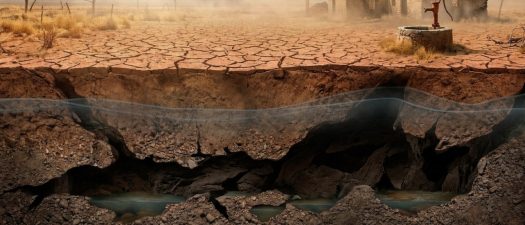

Replenishing America’s Aquifers: Why Water Reuse Could Be the Solution
Read more -


Public Meets Private: A Collaborative Path to Sustainable Water
Water is the lifeline of a community. It powers industry, sustains agriculture, and supports our daily life. However, ensuring our water infrastructure remains strong.
Read more


